
The New York Times reports that Grouping Students by Ability Regains Favor in Classroom. Summary:
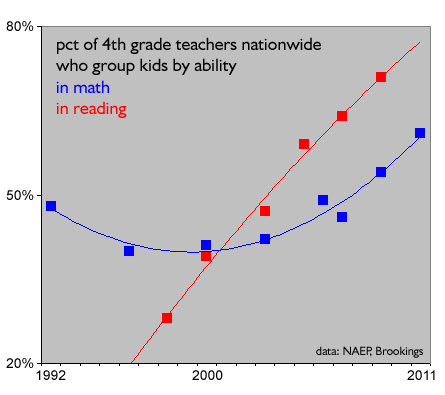
- After falling out of favor in the 1990s, ability grouping has re-emerged in classrooms all over the country. Of 4th grade teachers nationwide, 71% grouped students by reading ability in 2009, up from 28% in 1998. In math, 61% grouped in 2011, up from 40% in 1996. (see graph)
- Teachers and principals who use grouping say it has become indispensable, helping them cope with widely varying levels of ability and achievement. Done judiciously and flexibly, they say, grouping can help all students.
- A 4th grade teacher in NH and her principal describe “dynamic grouping,” in which she begins each unit with an initial assessment, forms three or four groups of kids, then revises the groups frequently and flexibly as they proceed.
See the original report at Brookings, discussion from the study’s author, and further discussion at Education News.
Please share your thoughts with other families in the comments section below.
Last month MVGATE surveyed local parents and educators, and found that both agree that MV schools should maintain or expand ability grouping. And they agree that the top priorities should be “to maintain flexibility [in grouping] and avoid labeling kids” and “to provide new learning options for advanced learners.” More details here [insert link].
Also see the NYT’s debate, “Are Top Students Getting Short Shrift? — Lumping all students together in one class may help average and struggling children, but does that come at a cost to top performers?”




 MV GATE